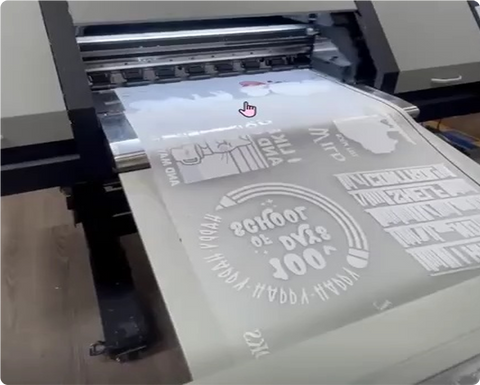
Why DTF Gang Sheet Builder Software Matters for Print Shops
Manual layout leaves gaps. Even a skilled operator eyeballing placement wastes 20-30% of a sheet's usable film on spacing that a computer would close instantly. At current film and ink prices, that's real money walking out the door on a busy production floor, sheet by sheet.
DTF gang sheet builder software solves one specific problem well: arranging multiple designs onto a single sheet with minimal wasted space, then exporting a print-ready file. What separates a good tool from a mediocre one comes down to a handful of features worth understanding before you hand over a credit card.
Core Features to Look For in DTF Gang Sheet Builder Software
Auto-nesting and rotation matter most. The best builders don't just line designs up in rows and call it done. They rotate pieces where it helps, catch irregular shapes, and pack a sheet tight enough to beat manual layout by 15-30% without anyone touching a mouse.
Gutter and bleed control comes next. Consistent spacing between designs, usually 2-3mm, keeps transfers from bleeding into each other during cutting and pressing, and it should happen automatically rather than needing manual adjustment on every single sheet.
File handling and output matter more than people expect going in. Bulk upload support (ideally 100 or more files at once), print-ready PNG or PDF export with transparent backgrounds, and automatic DPI and color profile checks before anything reaches the printer all save real time downstream.
Sheet size flexibility rounds it out. Standard DTF film widths, 13", 16", 22", 24", plus custom sizing for whatever printer you're actually running, roll-fed or sheet-fed.
Pricing Models and What They Mean for Your Margin
Some builders price by film area used. Others charge per design no matter the size. Area-based pricing tracks actual material cost more accurately, especially once a sheet mixes small and large designs.
Free and donation-based tools exist and work fine at lower volume, though "free" tends to come with a catch somewhere in reliability or support down the line. Film waste is a margin issue before it's ever a convenient one. A tool that saves 20% of your film usually pays for itself faster than the trial period even ends.
Customer Self-Serve vs. Internal Production Tools
Some builders plug directly into a storefront, letting customers upload their own designs and build a gang sheet without an operator ever touching the file. That fits shops selling gang sheets or DTF transfers directly online.
Other tools stay strictly internal, built for an operator or production team prepping files for in-house apparel runs rather than outside customers. The right one comes down to a simple question: are you selling sheets, or selling finished garments?
Matching Software to Your Shop's Volume
-
Small shops (roughly 1-50 sheets/day): lightweight, web-based builders with fast setup and minimal learning curve
-
Mid-volume shops (consistent 200+ sheets/month): subscription tools with batch processing built in
-
High-volume shops (multiple printers, 50+ sheets/day): full RIP software with built-in nesting, where a standalone gang sheet builder starts feeling more like a limitation than a solution
Getting this wrong in either direction- buying more software than your volume needs or less than it demands- is one of the easier mistakes to make and one of the easiest to avoid.
Questions to Ask Before You Commit
Before signing up for anything, get clear answers on:
-
Does it integrate with your existing printer, RIP, or ecommerce platform
-
How well does it handle irregular shapes and transparent pixel cleanup
-
What's the real cost per sheet once film savings are factored in, not just the subscription price
-
Is a trial or sample run available before you commit production to it
Frequently Asked Questions
1. What is DTF gang sheet builder software?
It's software that automatically arranges multiple designs onto a single DTF transfer sheet, optimizing spacing and film use, then exports a print-ready file.
2. How much film can auto-nesting actually save?
Most shops see 15% to 30% better film utilization than manual layout, depending on design variety and sheet size.
3. Do I need gang sheet builder software if I only print a few sheets a week?
Possibly not. At very low volume, manual layout or a free basic tool may be enough. The savings from automation grow as sheet volume increases.
4. Can customers build their own gang sheets through my online store?
Yes, with builders that offer ecommerce integration, typically for Shopify or WooCommerce, customers can upload designs and build sheets directly at checkout.
5. What's the difference between a gang sheet builder and a full RIP software?
A gang sheet builder focuses specifically on layout and nesting. A full RIP suite handles color management, printer communication, and nesting together, and generally suits higher-volume shops with multiple printers.