Two Popular Ways to Print Custom Apparel
Screen printing used to be the default option. Now print shops, apparel brands, and Etsy sellers are choosing between two digital methods: DTF and DTG. Both produce vibrant, full-color designs, and both can run a real business. But they get there in totally different ways, and picking the wrong one for a given order can mean wasted setup time, a garment that falls apart after two washes, or a missed deadline.
The order sitting in front of you decides which method makes sense, not some general ranking of which one's "better."
What Is DTG (Direct-to-Garment) Printing?
DTG works like an inkjet printer, except the paper is a T-shirt. Water-based ink sprays directly into the fibers of a pretreated garment, then gets heat-cured to lock the design in.
It shines on 100% cotton and cotton-heavy blends, where the ink soaks in, leaving a soft, almost invisible feel. Detail work and photo-realistic designs come out great, which is why it's a favorite for one-off portraits, small art prints, and single-unit print-on-demand orders.
The catch is workflow. Cotton needs pretreatment before the ink bonds right. The printhead needs daily attention, or white ink starts settling and clogging things up. And since each garment is printed one at a time, speed drops quickly as volume climbs.
What Is DTF (Direct-to-Film) Printing?
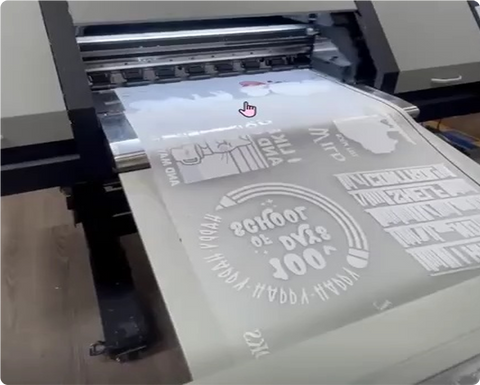
DTF goes a different route. The design is printed onto a special PET film, dusted with hot-melt adhesive powder, and then heat-pressed straight onto the garment. No pretreatment, no loading fabric into a machine piece by piece.
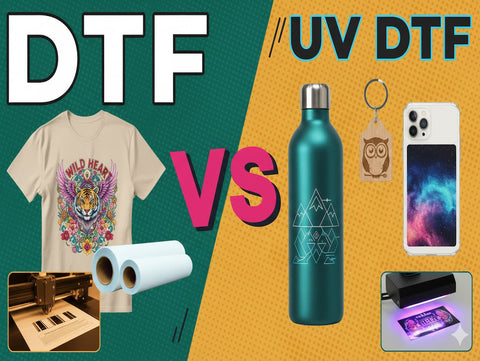
That's also what makes it the workhorse of the two. It holds up on cotton, polyester, blends, nylon, and plenty of things that aren't clothing at all: hats, tote bags, tumblers. It's built for gang sheets, bulk runs, and the daily reorders that keep a press running non-stop, and it does it with strong wash durability and no order minimums getting in the way.
The hand-feel runs a bit heavier than DTG because the print sits on top of the fabric rather than soaking in. Most people can't tell the difference on everyday apparel once the shirt's been worn and washed a few times.
DTF vs DTG: Side-by-Side Comparison
|
Fabric range |
Cotton, cotton blends |
Cotton, polyester, blends, nylon, non-apparel items |
|
Hand-feel |
Soft, ink absorbed into fibers |
Slightly heavier, sits on top of fabric |
|
Pretreatment |
Required |
Not required |
|
Best order size |
Single units, small batches |
Bulk runs, gang sheets, reorders |
|
Equipment upkeep |
Daily printhead maintenance |
Film and adhesive handling |
|
Order minimums |
Typically none |
Typically none |
Which Should You Choose?
Depends on your business, honestly:
-
Running varied, single-piece print-on-demand orders? DTG's detail and soft feel usually win out.
-
Doing bulk runs, mixing fabrics, or printing on things other than shirts? DTF gets you more mileage.
-
Need a fast turnaround on a large quantity for a school, church, or event? DTF, almost every time.
-
Building a boutique apparel line around that ultra-soft cotton feel? DTG might be worth the extra steps.
A lot of the best shops skip picking a side entirely. They run both and reach for whichever one matches the job that just landed.
Cost and Turnaround Considerations
DTG equipment costs more upfront and to maintain, primarily due to the pretreatment station and printhead upkeep. DTF setups cost less and scale better at volume; gang sheets let you print several designs in a single press cycle instead of one garment at a time.
When there's a deadline involving an event next weekend, a holiday rush, a reorder that can't wait turnaround time starts to matter as much as print quality. That's where DTF tends to earn its reputation: same-day production, no setup fees, nothing standing between you and a finished order.
Matching the Method to the Job
DTF and DTG aren't competing so much as covering different ground. The shops that do this well know when to reach for each one. If your next order needs speed, fabric flexibility, and no minimums, upload your design or build a gang sheet and see how quickly DTF gets you from file to finished garment.
FAQ
1. Which is more durable, DTF or DTG?
Both hold up fine with proper care, though DTF usually has a slight edge in long-term wash resistance and flexibility.
2. Can DTF and DTG be used on the same garment?
Not in the same design area, typically. A shop might just use DTG for one product line and DTF for another.
3. Is DTG better than DTF for dark-colored shirts?
Both rely on a white underbase to keep colors vibrant on dark fabric, so either works fine; fabric type and order volume usually decide it instead.
4. Do I need special equipment to use DTF transfers?
A standard heat press set to 300–320°F with medium-to-firm pressure covers it. No printer or pretreatment station needed on your end.
5. Which method is cheaper for small orders?
DTF, usually no order minimums, and none of the per-unit setup costs that pretreatment and printhead cycles add to DTG.
6. What fabrics work best with DTF versus DTG?
DTG does best on 100% cotton and cotton blends. DTF handles cotton, polyester, blends, nylon, and non-apparel surfaces like hats and bags.